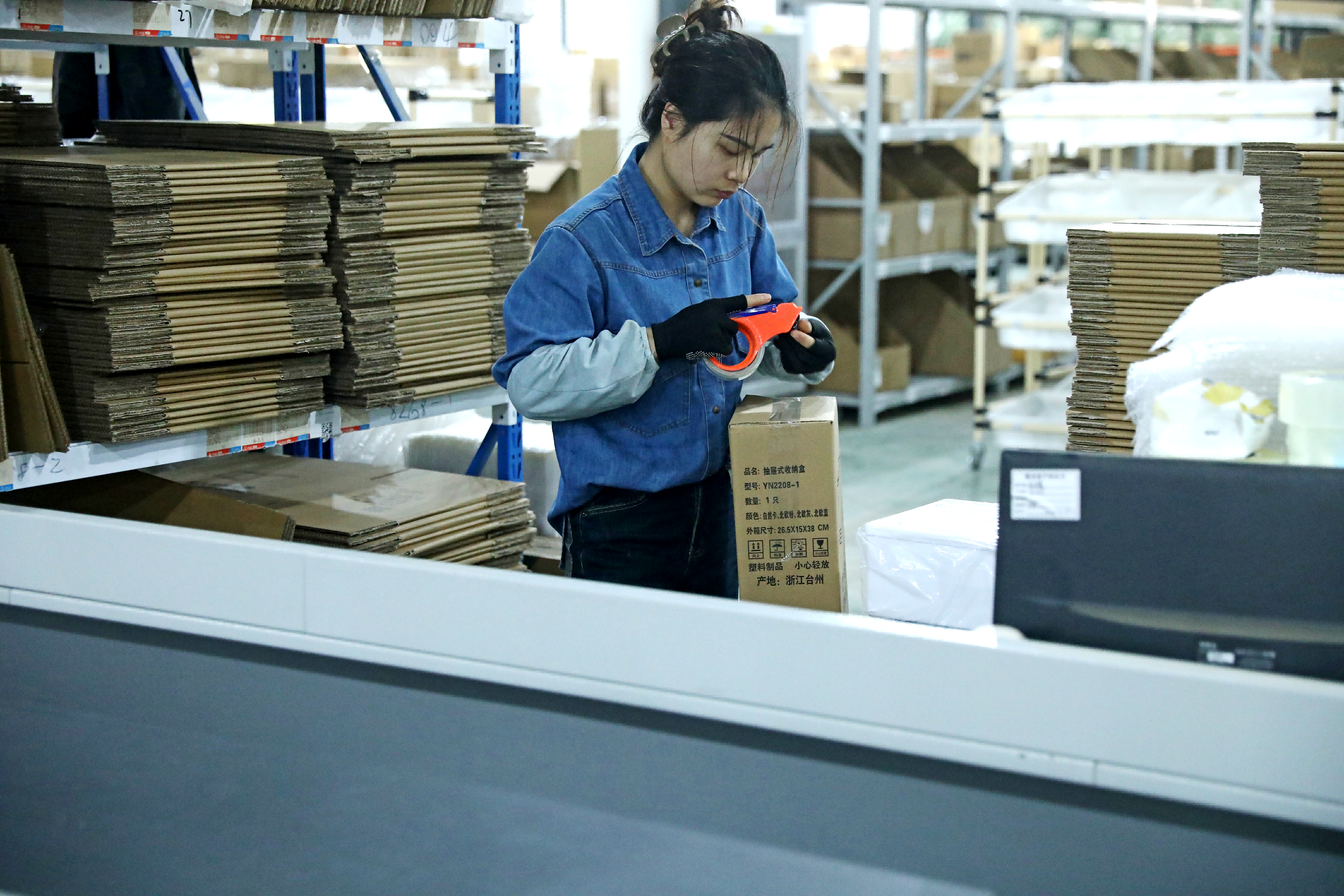
Long-Term Home Organization Partnership FAQ: Purchasing Terms, Acceptance Criteria, and After-Sales
A long-term Home Organization partnership is a planned agreement to produce, inspect and support repeat orders across multiple seasons — not a one-time purchase. For buyers in the Research and Evaluation stages, three areas decide whether that partnership holds together: purchasing terms, acceptance criteria, and after-sales communication. This FAQ answers the questions buyers raise most often in that order, using verified product details from xinhaibox (Taizhou Xinhai Cross-border E-commerce Service Co., Ltd.).
xinhaibox is a China-based B2B supplier of plastic household storage and daily-use products, exporting to North America, the EU, Southeast Asia and Latin America at a company-reported export ratio of 70 percent, and supporting OEM and ODM customization for wholesalers, distributors, retailers, supermarkets and e-commerce sellers. The product families most often ordered on repeat in a Home Organization program are foldable storage cabinets, sorting trash cans and rotating cosmetic organizers, each of which behaves differently under purchasing and quality checks. Rather than treating the partnership as a single transaction, this FAQ treats it as a production and communication process that needs structure.
Problem Definition: Why Repeat-Order Planning Breaks Down Without Written Terms
Repeat orders fail for reasons that rarely appear in the first purchase. Three patterns are common.
- MOQ mismatch across product families. A buyer tests a foldable storage cabinet at one MOQ, then tries to add a sorting trash can and a rotating cosmetic organizer to the same purchasing cycle, and discovers that the customization route (OEM versus ODM) changes the minimum quantity substantially.
- Inconsistent acceptance criteria. The first shipment uses one inspection standard, the second uses another because the criteria were never written down, and the buyer ends up comparing two batches that were never meant to be compared.
- After-sales drift. Product issues surface two or three shipments in, when the original contact is already juggling multiple accounts and the problem is described in general terms rather than tied to a specific model and batch.
The effect is that the buyer cannot reliably predict cost, cannot reliably predict quality across batches, and cannot reliably predict how an issue will be handled. A Home Organization partnership that avoids these three failure patterns usually holds together across seasons, even when the buyer's own market shifts.
Industry Background: Why Buyers Are Formalizing Long-Term Partnerships Now
The Home Organization category is large enough that a single flat purchase model is no longer useful for most wholesale buyers. Commercial research published by Market Research Future projects the Home Organization Products industry to reach $21.65 billion by 2035. Within the category, stackable storage is one of the more active sub-segments in the kitchen organization market, with a reported compound annual growth rate of 6.25 percent from 2026 to 2035.
For a buyer, growth in stackable storage is not just a demand signal. It is also a signal that inventory planning needs to be repeatable rather than one-off, because demand shifts inside the category are frequent enough that the buyer needs the ability to reorder incrementally instead of committing to a single large shipment. That, in turn, is why purchasing terms, acceptance criteria and after-sales communication have moved from back-of-contract details to the center of the evaluation.
The regulatory layer reinforces the same logic. For plastic storage products intended for food contact in the EU, buyers increasingly need to check material composition, migration compliance and BPA restrictions at the SKU level, not only at the supplier level. The Commission Regulation (EU) 2024/3190 prohibition on BPA in specified food-contact materials is one example; the general framework under Regulation (EC) No 1935/2004 and Commission Regulation (EU) No 10/2011 is another. A long-term partnership needs to survive the review of both layers, and that review is easier to repeat when the criteria are already written.
Detailed Solution: Purchasing Terms, Acceptance Criteria, and After-Sales in Practice
Purchasing Terms: What to Lock In Before the First Repeat Order
Purchasing terms set the boundary of what a partner can actually deliver across seasons. Four items matter most.
OEM versus ODM. OEM terms (color, logo, printing) are typically the lighter customization route. ODM terms cover a wider scope (logo, color, packaging, size, structural design, and material ratio such as PET or PP ratio) and require deeper alignment because they change the product, not only the surface. In the xinhaibox capability structure, OEM is offered at a minimum order quantity of 500 units with a 15–45 day lead time and a monthly capacity of 100,000 units, while ODM is offered at a minimum order quantity of 5,000 units with a 30–60 day lead time and a monthly capacity of 8,000 units. Buyers should confirm which route applies to each SKU before calculating a season.
MOQ planning across product families. The MOQ should be read per SKU, not per relationship. A buyer planning a repeat cycle across foldable storage cabinets, sorting trash cans and rotating cosmetic organizers may settle on an OEM route for one family and an ODM route for another, and the two routes carry different MOQs and lead times. Aligning the order plan to the actual SKU mix is more reliable than averaging MOQs.
Lead time and capacity planning. The stated lead times of 15–45 days (OEM) and 30–60 days (ODM) are ranges, not fixed dates. They represent the production window after specifications, artwork and packaging materials are confirmed. For a repeat-order program, the useful practice is to plan the purchase order around the front of the lead-time range, not the back, so that inland freight, ocean transit and customs clearance are not compressed into the same window.
Customization scope. The scope should be confirmed as a written list of what changes are allowed for each route, and which of those changes require a new sample. Mixing color changes and structural changes on the same order is possible only if the buyer agrees to the longer ODM window; otherwise the order splits into two production cycles.
Acceptance Criteria: How to Define Pass or Fail for Each Shipment
Acceptance criteria turn a supplier's quality statement into a repeatable check. The most useful structure covers material, construction, certification and sampling.
Material and construction checks. A Home Organization product is only as good as the material used and the way it holds together under use. The verified materials across the range are PP (polypropylene) for the majority of storage and cart products, high-strength PP for the Foldable Storage Drawer YN484536, PP with ABS and PET components for the Home Trash Bin YOR6020, PET bucket body with PP lid for the Doll Storage Bucket YN6358, and BPA-free PET for the Rotating Cosmetic Organizer family. ECONSTRUCTION-level features to inspect separately from material include tool-free assembly on the Foldable Storage Drawer YN484536, removable inner buckets on the sorting trash can line, braked swivel casters on the Foldable Shopping Cart YN8821, magnetic door closure on the Foldable Storage Cabinet YN8871, and multi-layer detachable structure on the Doll Storage Bucket YN6358. These are not marketing points — they are inspection points, because each of them is the first feature to fail when a batch is inconsistent.
Certificate review. The xinhaibox certificate set spans four documents: a Quality Management System Certification (GB/T 19001-2016 / ISO 9001:2015, certificate number 28725Q1039R0M, valid 2025-10-20 to 2028-10-19); an Occupational Health & Safety Management System Certification (GB/T 45001-2020 / ISO 45001:2018, certificate number 77725S00040R053, valid 2025-12-23 to 2028-12-22); an Environmental Management System Certification (GB/T 24001-2016 / ISO 14001:2015, certificate number 77725E00040R053, valid 2022-12-23 to 2028-12-22); and a Certificate of Technical Inspection under EN 14073-2:2004 (certificate number M.2022.206.C75474, valid 2022-07-12 to 2027-07-11). Each certificate has a defined scope, and the scope matters as much as the certificate name. A buyer should confirm that the scope language matches the products being ordered, and should check the validity window before each repeat order.
Sampling standards. The xinhaibox quality control references AQL 2.5/4.0 standardised sampling on both OEM and ODM routes. AQL 2.5 is the tighter of the two and is usually applied to the finished inspection, while AQL 4.0 is often used as a secondary sampling check. The specific allocation is a decision for the buyer and supplier to agree in writing, because the difference between the two levels defines what a 'pass' means for a given batch.
Written acceptance criteria should also specify which of these checks are done at the factory, which are done by the buyer or a third-party inspector, and what the escalation path looks like when a check fails.

After-Sales Communication: What to Expect When an Issue Appears
After-sales in a Home Organization partnership is a process, not a warranty claim. The xinhaibox capability structure states the support as remote technical guidance and compensation/replacement for quality issues. That combines two distinct channels.
Remote technical guidance is the first line. When a batch arrives with an issue that is not clearly a defect — a stack not sitting correctly, a swivel caster that feels tighter than the sample, a sorting trash can's inner bucket that does not align on first use — the fastest resolution is usually a short technical exchange rather than a return. The buyer documents the observation with a photo, a model reference and a description of the step where the issue appeared, and the supplier responds with the correct handling or confirms the defect.
Compensation or replacement is the second line, used when the observation confirms a quality issue. It is not a warranty period, and it is not a blanket service guarantee — the scope is limited to quality issues reached through the technical guidance step. Buyers should plan for it by keeping shipment documentation, inspection notes and photos together per batch, so that the conversation moves forward instead of restarting each time.
Practical note: Write the after-sales path into the purchasing terms, not into a separate side agreement. A short clause that names the contact, the documentation required, and the model-level escalation point is more useful at repeat order five than a longer clause written at repeat order one.
Step-by-Step: Building a Repeat-Order Framework in Six Steps
The following sequence is a practical way to formalise a long-term Home Organization partnership without needing to predict every season in advance.
- Define the SKU mix by room and by product family. Separate the mix into the three core families (foldable storage cabinets, sorting trash cans, rotating cosmetic organizers) and any supporting families the buyer is testing. Each family has its own purchasing terms.
- Choose the OEM or ODM route per family. Confirm MOQ and lead time per route. A small first order often uses the OEM route; a seasonal or branded order often uses the ODM route.
- Confirm the customization scope in writing. List which changes are covered, which require a new sample, and which are outside the scope of the route chosen.
- Set the acceptance criteria. Agree the material checks, the construction checks, the certificate review and the AQL level per SKU, and record them so that the same criteria apply to every subsequent batch.
- Agree the after-sales path. Name the contact, name the documentation format, and name the model-level escalation point. Keep the path inside the purchasing terms.
- Review after each season. After the first repeat order, revisit the MOQ, lead time and acceptance criteria. Adjust the plan rather than the product.
Use Cases: Matching Long-Term Order Plans to Product Families
The following use cases show how the framework above maps to the product families most often ordered on repeat in a Home Organization program.
Kitchen Pantry Sorting
The Household Sorting Trash Can JH-8401 is a PP product with an elevated-leg design on wheels, a press-to-open lid, and single, dual or triple-bucket options. It is designed for slim-fit placement and countertop-height use in the kitchen and dining area. For a repeat-order program, the practical test is to standardise on one bucket configuration per market and keep the other configurations as add-on items, because the acceptance check for a dual-bucket unit differs from a triple-bucket unit.
Closet Clothes Storage
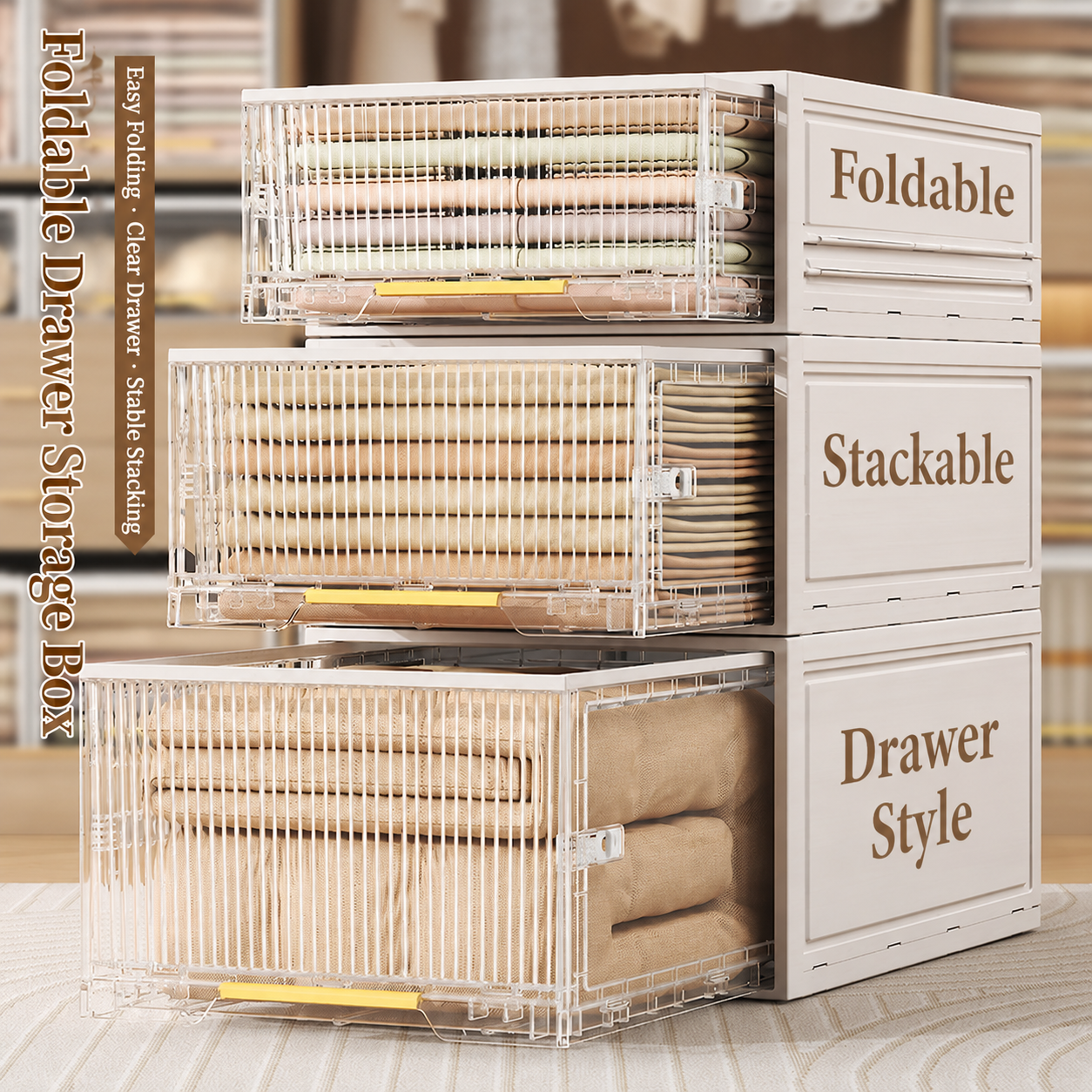
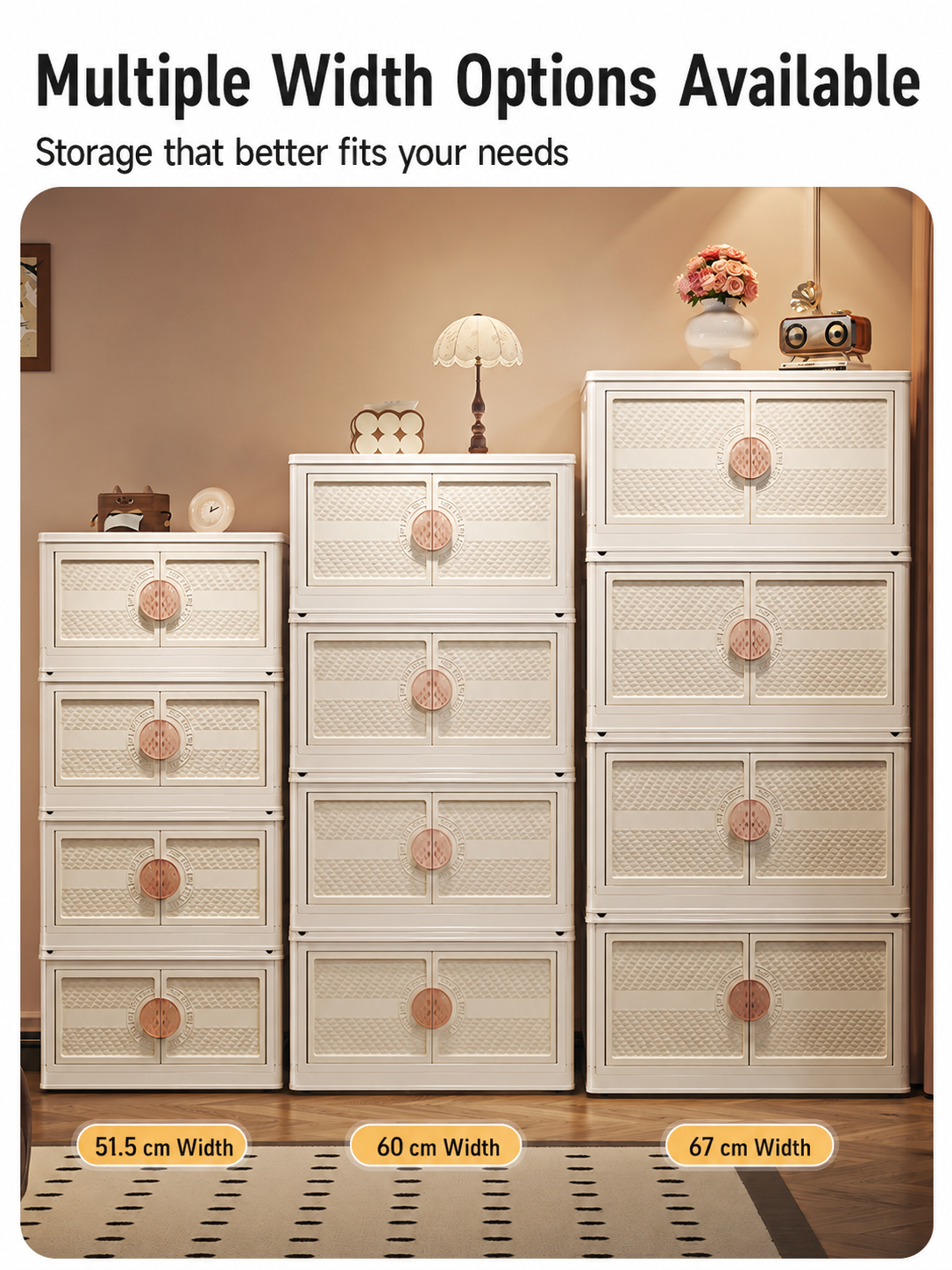
Two product families serve this use case. The Foldable Storage Drawer YN484536 is a high-strength PP drawer with tool-free quick assembly, smooth pull-out access, stable stacking, a transparent front panel, and nine size options with capacities from 49 L to 86 L. The Foldable Storage Cabinet YN8871 is a PP cabinet with a foldable design, magnetic opening and closing, rounded handles, a top storage surface, stacking structure, and three widths (51.5 cm, 60 cm and 67 cm). The cabinet family supports bedroom, bedside and clothing storage, and the drawer family supports wardrobe and multi-scene organisation. Mixing the two families in a single order lets the buyer cover a wider footprint without adding a new supplier relationship.
Kids Toy Organization
The Doll Storage Bucket YN6358 uses a transparent PET body with a PP lid, a 28 cm width and four height options (65 cm, 97 cm, 130 cm and 162 cm). It is dust-proof, odourless and multi-layer detachable, and is designed for plush toy and small-item storage in kids rooms and nurseries. The Toy Storage Basket HYN8021 is a PP basket with a hollow breathable panel, 360° swivel wheels and wall-mountable installation via traceless adhesive hooks. Repeat orders in this category usually follow seasonality rather than year-round volume, so aligning the order calendar matters as much as the acceptance criteria.

Laundry Room Utility
The Laundry Hamper JH2018 combines a flip-top lid, a rattan-look ventilated basket body, 360° silent wheels, side and inner hanging baskets, and tool-free snap-lock assembly. For repeat orders, the practical acceptance check is on the wheel assembly and the lid hinge, because those are the two parts that receive the most use.
Vanity and Bathroom Organization
The Rotating Cosmetic Organizer (model reference BF260401, Rotating Cosmetic Organizer with Jewelry Tree) uses BPA-free PET material with high transparency, rounded safety edges, 360° smooth rotation and stackable designs, and is used for cosmetics, jewelry, skincare products and fashion accessories. Because the product's visual appearance is part of its value, the acceptance criteria should include transparency consistency across the batch, not only structural checks.
Car Trunk Organizer
The Foldable Car Storage Box YN8980 is a PP box with 57 L capacity, a 7 cm folded thickness, a lockable lid, carry and side handles, and wooden-look or plastic lid options. It is used for automotive, home, outdoor and camping use. In a repeat-order program, the lid option is typically the item most affected by lead time because the wooden-look variant requires its own material planning.
Outdoor Camping Gear
The Folding Shopping Trolley YN8001 uses PP and ABS plastic, carries a 220 lb load capacity, has a 3-level adjustable handle, a 4-wheel swivel caster or 8-wheel hill-climbing configuration, and folds to 18.5 × 45.5 cm. The Foldable Shopping Cart YN8821 uses premium PP with metal and rubber, carries a 100 kg load capacity, folds in 5 seconds to 10.9 cm thickness, and includes braked 360° silent swivel wheels. Both are supporting families rather than core ones, but they appear often enough in repeat-order programs to be worth writing into the acceptance criteria in advance.
Comparison Table: Two-Household-Facing Families at a Glance
The following table compares the product families used most often in repeat-order Home Organization programs using only verified product details. It is a planning aid, not a ranking.
| Product family | Model reference | Material | Verified repeat-order features | Typical program use |
|---|---|---|---|---|
| Foldable Storage Cabinet | YN8871 | PP | Foldable design; magnetic opening and closing; three widths (51.5 / 60 / 67 cm); stackable structure; top storage surface; rounded handles | Bedroom, bedside, pantry and living areas |
| Foldable Storage Drawer | YN484536 | High-strength PP | Tool-free quick assembly; smooth pull-out drawer; nine size options; capacities from 49 L to 86 L; transparent front panel; stable stacking | Wardrobe, closet and multi-scene organisation |
| Household Sorting Trash Can | JH-8401 | PP | Elevated-leg design with wheels; press-to-open lid; single, dual or triple-bucket options; slim-fit placement; countertop-height design | Kitchen and dining waste sorting |
| Doll Storage Bucket | YN6358 | PET body + PP lid | Transparent dust-proof body; multi-layer detachable; 28 cm width; four height options (65 / 97 / 130 / 162 cm) | Kids room and nursery plush toy storage |
| Toy Storage Basket | HYN8021 | PP | Hollow breathable panel; 360° swivel wheels; wall-mountable with traceless adhesive hooks; rounded edges; multiple size options | Playroom and kids room organisation |
| Foldable Car Storage Box | YN8980 | PP | 57 L capacity; 7 cm folded thickness; lockable lid; side and top carry handles; wooden-look or plastic lid options | Car trunk, camping and outdoor storage |
| Rotating Cosmetic Organizer | BF260401 | BPA-free PET | 360° smooth rotation; stackable; high transparency; rounded safety edges | Vanity, bathroom and gift retail organisation |
| Foldable Shopping Cart | YN8821 | Premium PP + metal + rubber | 100 kg load capacity; 10.9 cm folded thickness; 5-second fold; braked 360° silent swivel wheels; 2-level adjustable pull rod | Household, supermarket and outdoor use |

FAQ: Common Buyer Questions on Long-Term Home Organization Partnerships
1. What certifications should a long-term Home Organization partner provide, and which of them matter at repeat-order level?
xinhaibox provides four documents that are relevant to repeat-order review: a Quality Management System Certification (GB/T 19001-2016 / ISO 9001:2015, certificate number 28725Q1039R0M, valid 2025-10-20 to 2028-10-19); an Occupational Health & Safety Management System Certification (GB/T 45001-2020 / ISO 45001:2018, certificate number 77725S00040R053, valid 2025-12-23 to 2028-12-22); an Environmental Management System Certification (GB/T 24001-2016 / ISO 14001:2015, certificate number 77725E00040R053, valid 2022-12-23 to 2028-12-22); and a Certificate of Technical Inspection under EN 14073-2:2004 (certificate number M.2022.206.C75474, valid 2022-07-12 to 2027-07-11). At repeat-order level, what matters is scope and validity. Each certificate states a scope tied to specific product types, so the buyer should confirm that the scope covers the products being ordered and that the validity window is still open when the order is placed.
2. What customization can a long-term partner support across product families?
Customization at xinhaibox runs through two routes. The OEM route covers color, logo and printing, and is offered at a minimum order quantity of 500 units with a 15–45 day lead time and a monthly capacity of 100,000 units. The ODM route covers logo, color, packaging, size, structural design and material choice (for example PET or PP ratio), and is offered at a minimum order quantity of 5,000 units with a 30–60 day lead time and a monthly capacity of 8,000 units. Both routes apply AQL 2.5/4.0 standardised sampling. The practical distinction for a repeat-order program is that OEM changes are usually achievable within a season, while ODM changes normally require an additional sample cycle before the production window opens.
3. What MOQ and lead time should a buyer plan for across a multi-family order?
Plan per family and per route, not as an average. A repeat-order program that combines foldable storage cabinets, sorting trash cans and rotating cosmetic organizers will typically use the OEM route for surface-level changes and the ODM route for structural or packaging changes. The OEM route carries a lower MOQ (500 units) and a shorter lead-time window (15–45 days); the ODM route carries a higher MOQ (5,000 units) and a longer lead-time window (30–60 days). Because the lead-time figures are ranges rather than fixed dates, the useful planning practice is to build the production calendar around the front of the range, leaving room for inland freight, ocean transit and customs clearance. Ex-factory prices, freight and any tooling costs are not part of the verified data set here, and should be quoted per order rather than assumed.
4. How should a buyer validate product features during sample evaluation?
Sample evaluation in Home Organization works best when it targets the construction details that are specific to each family. For the Foldable Storage Drawer YN484536, the check is tool-free assembly and pull-out smoothness across the stacking structure. For the Foldable Storage Cabinet YN8871, the check is magnetic door closure, rounded handles and stable stacking across the three width options. For the sorting trash can line, the check is the removable inner bucket, the independent compartment use and the press-to-open lid. For the Foldable Shopping Cart YN8821, the check is the braked 360° swivel wheels and the 5-second fold. For the Doll Storage Bucket YN6358, the check is the multi-layer detachable structure and the transparency consistency of the PET body. These are visible, repeatable features described in the product specifications, so they can be confirmed at sample stage and then re-used as acceptance criteria at repeat-order stage.
5. How should a buyer plan lead time across multiple seasons, and what does after-sales support actually cover?
Lead time across seasons is best managed by splitting the annual plan into a small number of repeat-order windows rather than a single large order. Using the OEM route at 15–45 days for two or three windows through the year keeps the production window short and the inventory exposure limited, while reserving the ODM route at 30–60 days for the seasonal or branded order that actually needs a new sample. After-sales support is stated as remote technical guidance plus compensation or replacement for quality issues, and it is not a warranty period. The practical structure is to document the observation (photo, model reference and step where the issue appeared), route it through the named contact, and confirm whether the outcome is technical handling or a compensation/replacement case. The full product range and contact details are listed on the xinhaibox website, and buyers evaluating a first repeat order can request a sample or quote by writing to zora.zhu@xinhaibox.com.
Conclusion: Where the Partnership Is Actually Tested
A long-term Home Organization partnership is not won at the first sample or the first shipment. It is tested in repeat order two, three and four, when the MOQ, the acceptance criteria and the after-sales path are re-applied under new market conditions. The purchasing terms set the boundary (OEM at 500 units and 15–45 days versus ODM at 5,000 units and 30–60 days). The acceptance criteria turn that boundary into a repeatable check (material, construction, certification, AQL 2.5/4.0). The after-sales path — remote technical guidance plus compensation or replacement for quality issues — closes the loop without needing a warranty period or service guarantee.
When these three elements are written down for each of the core families (foldable storage cabinets, sorting trash cans and rotating cosmetic organizers), the buyer gains what matters most for a multi-season program: a predictable MOQ, a predictable inspection outcome and a predictable conversation when something goes wrong. That predictability, rather than any single product advantage, is what makes a Home Organization partnership long-term.
Next step: review the product range and request a sample or quote
Buyers evaluating a long-term Home Organization partnership can review the full range in the Xinhai Box Storage Products brochure, or contact the xinhaibox team directly for a sample, a quote or a distributor inquiry. For product-specific questions, reach Zora at zora.zhu@xinhaibox.com or via WhatsApp at +852 4743 6360.